
The food and beverage industry has always evolved alongside consumer behavior, but 2026 is shaping up to be a year where those shifts feel more pronounced than ever. Changing lifestyles, digital convenience, health awareness, and global influences are all pushing businesses to rethink how they operate, market, and grow.
For anyone running, or planning to enter, the industry, understanding these trends isn’t just useful, it’s necessary. The businesses that adapt early are the ones that stay relevant. Let’s take a closer look at the key food and beverage trends defining 2026.
Convenience has been a driving force for years, but in 2026, it’s no longer just about speed. It’s about smart convenience. Customers now expect:
Seamless mobile ordering
Accurate delivery times
Easy customization of meals
Minimal waiting, both online and offline
What’s changing is how businesses deliver this convenience. It’s not just about being fast, but being efficient and predictable.
Brands are investing in:
AI-driven order management
Streamlined kitchen workflows
Integrated POS and delivery systems
Delivery is no longer an add-on; for many businesses, it’s the core model. Cloud kitchens continue to expand because they:
Require lower upfront investment
Focus entirely on delivery demand
Allow multiple brands to operate from one space
In 2026, even traditional dine-in restaurants are designing menus and packaging specifically for delivery performance. This shift has also changed how menus are built:
Items that travel well are prioritized
Packaging is part of the brand experience
Speed of preparation matters more than ever
Health-focused eating is no longer a niche. It’s mainstream. Consumers are more aware of:
Ingredients and sourcing
Nutritional value
Portion control
But here’s the shift: people don’t want to sacrifice taste anymore. Instead of “diet food,” the trend is moving toward:
Balanced meals with real ingredients
High-protein and low-sugar options
Plant-forward (not necessarily fully vegan) menus
Restaurants that clearly communicate what goes into their food, and why, are gaining trust faster.
In previous years, sustainability was a marketing angle. In 2026, it’s an expectation. Customers are paying attention to:
Packaging waste
Sourcing practices
Energy use
Food waste management
Businesses are responding with:
Eco-friendly packaging
Locally sourced ingredients
Smaller, more efficient menus to reduce waste
What’s notable is that sustainability is no longer optional for brand image. It directly influences buying decisions. Especially among younger consumers, environmentally responsible brands are preferred over others.
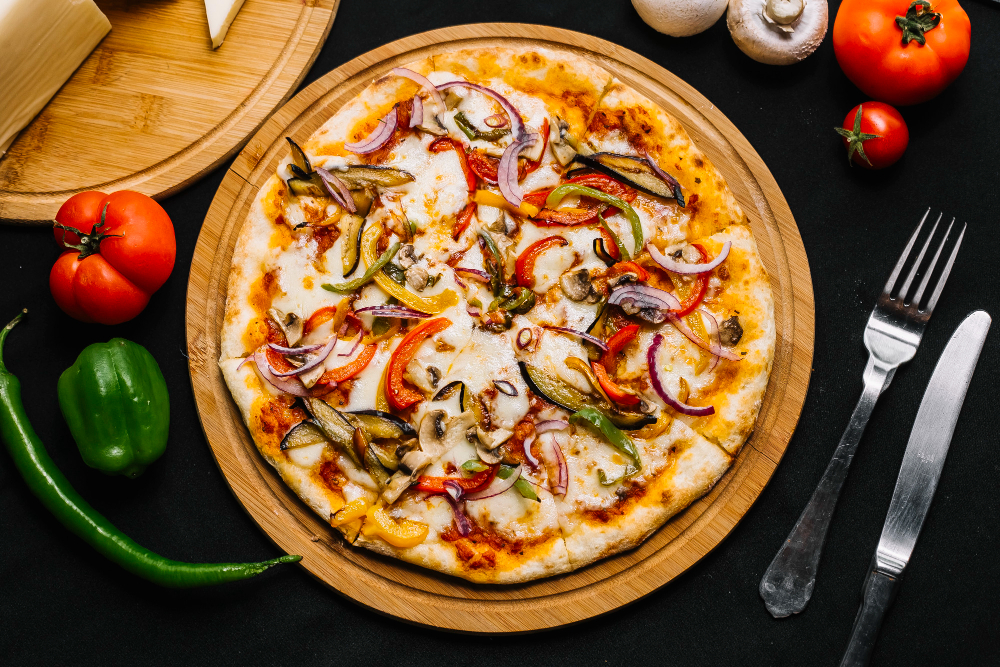
One of the most noticeable shifts in 2026 is the strong growth of pizza franchises and similar comfort-food concepts.
Pizza, in particular, continues to dominate because it checks multiple boxes:
Easy to customize
Ideal for delivery
Universally popular across age groups
Cost-effective to produce at scale
What’s different now is how pizza brands are evolving:
Gourmet and artisanal options are gaining traction
Faster, tech-enabled ordering systems are improving efficiency
Smaller takeaway-focused outlets are replacing large dine-in spaces
Pizza franchises are expanding rapidly because they are:
Highly scalable
Operationally simple compared to many cuisines
Well-suited for both dine-in and delivery models
This trend also reflects a broader movement toward comfort food with a modern twist. Familiar items, but upgraded in quality and presentation.
Technology in the food industry is now embedded into daily operations. In 2026, businesses are using tech for:
Inventory tracking and demand forecasting
Automated kitchen equipment
Customer data analysis
Personalized marketing campaigns
For example:
Returning customers might receive tailored offers
Peak hours are predicted more accurately
Staff scheduling is optimized based on demand
This level of integration helps reduce costs while improving customer experience.
Many food businesses are moving away from large, complicated menus. Instead, they are focusing on:
Fewer items
Higher quality
Faster preparation
Why? Because streamlined menus:
Improve consistency
Reduce inventory waste
Speed up service
Customers are also becoming more comfortable with specialized menus. A brand that does a few things really well often performs better than one trying to offer everything. This “less but better” approach is becoming a defining strategy in 2026.
Even with the growth of delivery, the in-person dining experience hasn’t lost its value. It has simply evolved. Customers now look for:
Clean, well-designed spaces
Quick but friendly service
A memorable atmosphere
However, the experience doesn’t need to be luxurious. It needs to be intentional.
Even small outlets are focusing on:
Branding consistency
Visual appeal
Efficient layout
Consumers are more open than ever to trying international cuisines, but they still prefer familiar elements.
This has led to:
Localized versions of global dishes
Region-specific customization
Businesses that balance global inspiration with local taste tend to perform better.
The food and beverage industry in 2026 is defined by a blend of innovation and practicality. While new technologies and concepts are shaping the future, the fundamentals remain the same: quality, consistency, and customer satisfaction.
What’s changed is how these fundamentals are delivered. From delivery-first models and smarter convenience to the rise of scalable concepts like pizza franchises, the industry is moving toward efficiency without losing its human touch.
Ready to bring Calgary and Edmonton a slice of success? Joe's Pizza Stone is expanding, and we're looking for pizza franchise partners to join our family.
With our proven business model and famous stone-baked pizza, you'll have all the ingredients to build a thriving community hub centered around delicious, high-quality food. Interested in this exciting opportunity? Get in touch with us today to learn more.


